
 Descargar App
Back to blog
guidesEssential golf accessories: what to carry and what you're being oversold
Bag, trolley, shoes, glove, rangefinder and what fits in your pockets. What to buy in year one, what can wait, and where the money gets wasted.
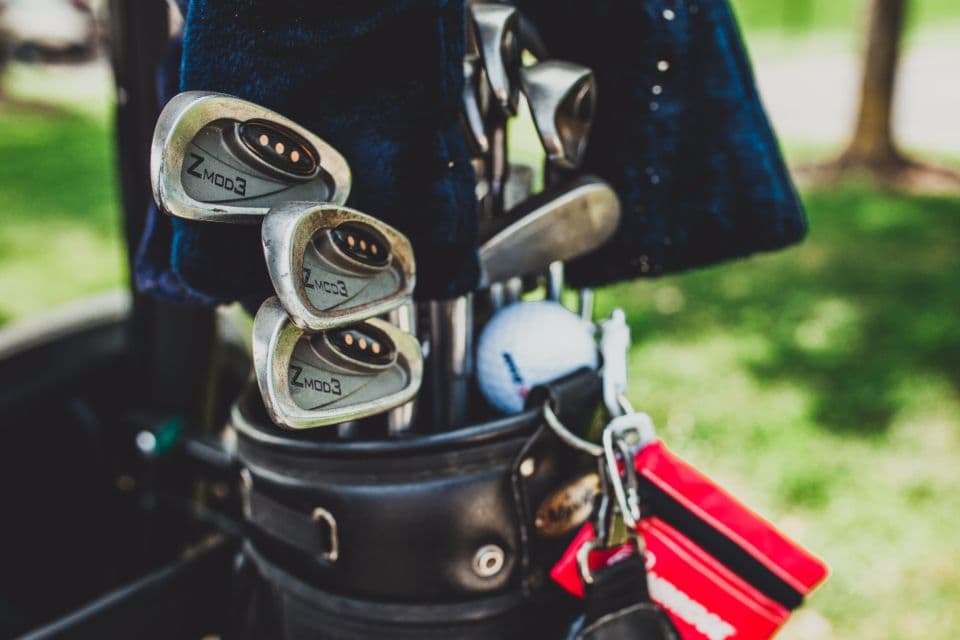
Essential golf accessories
Clubs are 70 % of what you spend and 100 % of what gets talked about. Accessories are the other 30 %, and that is where most buying happens on impulse rather than need.
Here is the list, ordered by what actually matters, with what can wait and what is simply unnecessary.
Level 1: what you need from day one
| Accessory | Price | Why |
|---|---|---|
| Glove | €15-25 | Prevents blisters and lets you hold the club lightly |
| Tees | €5 | They get lost. Buy plenty |
| Ball marker | €0-5 | A coin works |
| Pitchmark repairer | €3-8 | Not optional, it's etiquette |
| Balls | €15-30 a dozen | Start with the cheap ones |
| Cap and sun cream | €20-30 | Four hours in the sun |
On the glove: it goes on your non-dominant hand, and just one. Right-handed, the left. Thin leather grips better but wears faster; synthetic lasts longer with less feel. Keep two and alternate: they dry between rounds and last twice as long.
Level 2: within the first few months
Golf shoes (€60-120). You can start in flat-soled trainers, but there comes a point where you slip on the downswing and that destroys the swing.
- Spiked (soft plastic cleats): more grip, better on wet grass and slopes.
- Spikeless: more comfortable, wearable off the course, slightly less grip.
For most amateurs, a good pair of spikeless shoes is enough and far more versatile.
Bag (€60-200). Three types:
| Type | Weight | For |
|---|---|---|
| Stand bag | 2-3 kg | Walking. The default choice |
| Cart bag | 3-5 kg | If you always use a trolley or buggy |
| Tour bag | 5 kg+ | Unnecessary for an amateur |
If you plan to walk, a stand bag with a double strap. A single strap over 18 holes and six kilometres is avoidable discomfort.
Trolley (€100-300 manual, €600+ electric). A three-wheel push trolley is one of the best purchases in golf: it takes five to eight kilos off your back for four hours. Electric is a genuine luxury rather than a necessity, and only pays off if you play a lot or have back problems.
Level 3: once you are playing seriously
Rangefinder or GPS. Three options here, and one of them is free:
| Option | Price | What it gives |
|---|---|---|
| Phone app | €0 | Distance to the middle of the green. Fine to start |
| GPS watch | €150-350 | Distances without pulling your phone out |
| Laser rangefinder | €150-400 | Exact distance to the flag and any point |
Which to pick: the laser is more precise and it is what you want if you attack pins. GPS is faster and more practical if you only need the distance to the green. For a beginner, the phone app covers 90 % and costs nothing.
Technical clothing. A breathable technical polo makes a real difference in summer. It does not need to be a golf brand: any sports top with a collar meets the dress code at most courses.
Golf waterproof. Different from an ordinary one: it has to let your shoulders turn. A stiff rain jacket blocks the swing completely.
Where the money gets wasted
(01) A tour bag for walking. It weighs five kilos empty. Without a caddie, you don't need it.
(02) A premium rangefinder as a beginner. Knowing it is exactly 147.3 metres is useless when your dispersion with that club is 20 metres. Measure your real distances first — that is in golf club distances.
(03) Dozens of premium balls. Losing four a round means throwing €20 away every Sunday. Explained in how to choose a golf ball.
(04) High-end spare gloves. A cheap backup glove does the job perfectly.
(05) Training gadgets. Ninety-five per cent of the advertised gizmos train nothing you cannot train with two tees and a towel.
What lives in your pockets
The short list of what should be on you, not buried in the bag:
- A spare ball
- Two tees
- Your ball marker
- The pitchmark repairer
- Your glove, if you take it off to putt
Anything at the bottom of your bag will make you stop and hold up play to find it.
The check before leaving home
| Have you got it? |
|---|
| Clubs — and all 14 are yours (counting them avoids penalties) |
| At least 6 balls, 12 if the course has water |
| Glove (and a spare if it might rain) |
| Tees, marker, pitchmark repairer |
| Water and something to eat |
| Cap and sun cream |
| Waterproof if the forecast suggests it |
| A dry towel inside the bag |
How a round actually works is in your first day on a golf course.
Frequently asked questions
Which hand does the golf glove go on? The non-dominant one. Right-handers, the left. Just one.
Do I need golf shoes to start? Not immediately. Flat-soled trainers cover your first outings, but on wet grass you will end up slipping.
Which golf bag should I buy? If you walk, a stand bag with a double strap. If you always use a trolley, a cart bag. You don't need a tour bag.
Is an electric trolley worth it? Only if you play a lot or have back problems. A three-wheel push trolley solves 90 % of it for a fraction of the price.
Laser rangefinder or GPS? Laser if you attack pins and want metre-level precision. GPS if you only need the distance to the green and prefer speed. The phone app is enough to start.
How much do accessories cost in year one? €40-80 for the essentials. With shoes and a bag, €150-250.
How many clubs can I carry? Fourteen maximum. Count them before you leave: fifteen is a penalty.
Accessories will not lower your handicap. What they do is stop silly things — a blister, a slip, running out of balls on the 12th — from ruining a round.
When you book with Teeup you can add a buggy, trolley or rental equipment to your booking and head straight to the tee.
Download the Teeup app and book your next round.