
 Descargar App
Back to blog
guidesYour first day on a golf course: protocol, etiquette and rookie mistakes
What to bring, how tee times work, the dress code, the etiquette rules that actually matter and the beginner errors you can spot from a mile away. So you can play without the nerves.
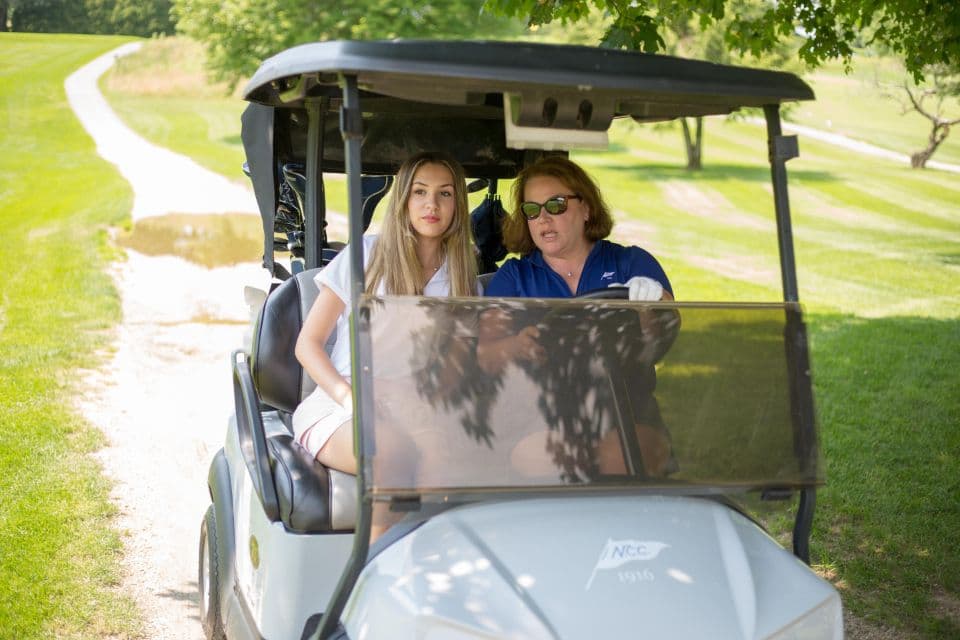
Your first day on a golf course
A beginner's fear is almost never playing badly. It is doing something wrong in front of people who know: arriving late, dressing wrong, standing in the wrong place, holding people up.
That anxiety is cured with information. Here is exactly how a round of golf works in Spain, start to finish.
Before you go: booking and what to bring
The tee time. In golf you don't just turn up and play: you book a tee time, a specific slot to start at the 1st. Courses space starts every 8-12 minutes. With Teeup you see real availability and book from your phone in seconds, with no phone calls.
Arrive 30-40 minutes early. Not 5. You need to check in, change, hit a few balls and warm up. Arriving with no margin is the fastest way to start the round tense.
What to have in the bag:
- Clubs (your own or rented at the course)
- More balls than you think. Six minimum
- Tees, glove, ball marker and pitchmark repairer
- Water and something to eat
- Cap and sun cream
- A waterproof if the forecast suggests it
What to ask when you book: whether a federation licence is required, whether they rent clubs and trolleys, and whether there is a maximum handicap. Most courses don't have one, but some do.
The dress code, demystified
It is more flexible than people fear, but it exists.
| Item | Yes | No |
|---|---|---|
| Top | Collared polo shirt | Round-neck t-shirt, vest, bare chest |
| Legs | Golf trousers or shorts | Jeans, tracksuit bottoms, swim shorts |
| Footwear | Golf shoes, or flat-soled trainers | Boots, sandals, football studs |
| Socks | Short socks with shorts | Long socks with shorts (at some clubs) |
Resort and public courses tend to be relaxed. Older private clubs are stricter and some won't let you into the clubhouse in jeans. If in doubt, ask when you book: a thirty-second question that saves an awkward moment.
How a round works, step by step
- Reception. Give your name, pay if you haven't already, and collect your start ticket. If there is a licence to show, this is where.
- Driving range. Hit around 20 balls without chasing perfection. Start with wedges and work up. And spend five minutes on the putting green: that is where you feel the speed of the greens that day.
- The 1st tee. Be there 5 minutes before your time. If you are out with strangers, say hello and give your name. It is completely normal and nobody bites.
- The honour. On the first hole, order is decided by lot or by lowest handicap. After that, whoever scored best on the previous hole goes first.
- During the hole. The player furthest from the hole plays. This is flexible in social play: if you are ready and not in anyone's way, hit (ready golf).
- On the green. Furthest away putts first. Mark your ball if it sits on someone else's line.
- Finishing the hole. Leave the green promptly and write down the scores on the next tee, not on the green.
- After the round. The clubhouse bar is part of golf. That is where the morning gets closed out.
The etiquette rules that actually matter
These are not formalities: they are safety, pace and course care.
Safety
- Never hit if anyone ahead is within reach. Not even "I don't think I can get there". Wait.
- If your ball heads towards anyone, shout "FORE!" loudly. It is the universal warning.
- Stay out of everyone's swing arc. Never directly behind or in front of someone about to hit.
Pace of play
This is the courses' number one complaint, and the thing your playing partners appreciate most.
- Get ready while others play. Choose your club, check the distance. Don't start thinking when it is your turn.
- Three minutes maximum searching for a ball. That is also what the rules say.
- If the group behind is on top of you, let them through. It is not humiliating, it is correct.
- Leave your bag or trolley on the exit side of the green, not on the way in. It saves fifty metres a hole.
A slow beginner bothers people far more than a beginner who plays badly. Nobody will judge you for shooting 110; they will for taking five and a half hours.
Silence and stillness
Absolute silence while someone is hitting, and stay still. Not just no talking: no moving, no rattling clubs, no phone on sound.
Course care
- Replace your divots or fill them with the sand mix carried on buggies and trolleys.
- Repair your pitchmark on the green with a repair tool, and fix another while you are there. An unrepaired pitchmark takes weeks to heal.
- Rake the bunker on your way out. Enter and exit from the low side, not the face.
- Don't walk on another player's putting line.
The eight most visible rookie mistakes
(01) Turning up five minutes before. It starts the day badly and you never recover it.
(02) Searching ten minutes for a ball. Three minutes. If it doesn't appear, drop nearby and carry on. In a social round nobody is keeping a record.
(03) Taking too many shots on one hole. If you are on eight at a par 4, pick up. It is correct and appreciated. In Stableford that hole no longer scores anyway.
(04) Leaving the bag on the wrong side of the green. Fifty extra metres a hole is nine hundred metres a round.
(05) Endless practice swings. One. Two at most.
(06) Not repairing your pitchmark. It is what irritates club members more than anything else.
(07) Driving a buggy where you shouldn't. Respect the signs, especially near greens and on wet days.
(08) Apologising every other shot. Everyone started somewhere. An occasional "sorry" is fine; constant apologising makes the group more uncomfortable than the bad shot did.
How to make your first round a good one
- Start with 9 holes. Eighteen first time out is too many hours and too much frustration.
- Go midweek, mid-morning. Fewer people, less pressure and lower prices.
- Go with someone experienced if you can. You learn more in one round than in a month of videos.
- Play from the most forward tee. It is not cheating: it is playing the course at your scale.
- Bring more balls than you think. Nothing ruins a round like running out on the 12th.
- Don't keep score on day one. Focus on enjoying it and not holding anyone up. The card can wait.
A public or municipal course is the best choice for a first outing: more relaxed, cheaper, and full of people in the same situation. The price breakdown by course type is in how much it costs to start playing golf.
Frequently asked questions
Do I need a federation licence for my first round? Most rated courses in Spain ask for one. Some offer a day licence or temporary insurance for a few euros. Ask when you book.
Can I wear jeans on a golf course? At many public courses yes; at private clubs almost never. When in doubt, golf trousers or chinos.
How long does 18 holes take? Four to four and a half hours walking. Nine holes, a little over two.
How early should I arrive before my tee time? Thirty to forty minutes, so you can check in, warm up and not start in a rush.
What does "fore" mean? It is the universal warning that a ball is heading towards someone. Shout it loudly and without embarrassment.
Do you tip on a golf course? Not customary in Spain. At some resorts a caddie is appreciated, but it is not expected.
Can I play on my own? At many courses yes, though at peak times you may be paired with another group. Booking midweek makes it easier.
Nobody remembers your first round except you. The people playing alongside you are thinking about their own shot.
Book a quiet course, arrive with time, walk briskly and enjoy it. With Teeup you can find courses near you, see each one's facilities before booking, and confirm your tee time in seconds.
Download the Teeup app and book your first round.