
 Descargar App
Back to blog
guidesThe history and origins of golf: from the Scottish dunes to the game you play today
Why 18 holes, where the word 'par' comes from, when golf reached Spain, and why the rulebook is so long. The history that explains how the game is played now.
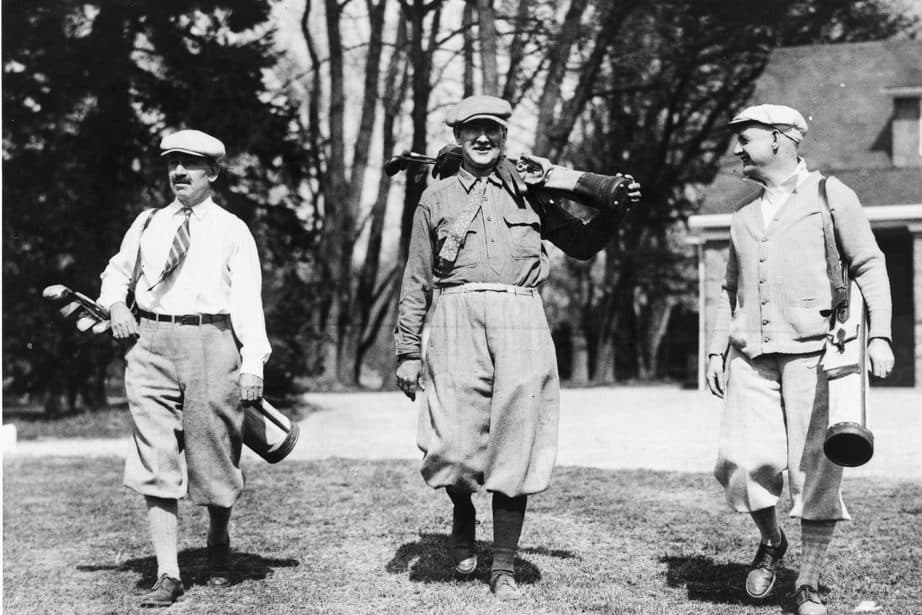
The history and origins of golf
Almost everything odd about golf has a historical explanation. Why there are 18 holes and not 20. Why the vocabulary is half Scots and half English. Why the rulebook is so detailed. Why it is played without a referee.
This is not trivia: understanding where the game came from explains why it is played the way it is.
The origin: Scotland, fifteenth century
Stick-and-ball games long predate it in various parts of Europe and Asia, and are frequently cited as ancestors. But golf as we would recognise it — a course of holes across the ground, played point to point until holed — emerged on Scotland's east coast.
The first documentary record is a ban: in 1457 the Scottish Parliament prohibited golf because it distracted the population from archery practice, which was a military obligation. It was banned several more times that century, which mainly indicates that nobody took any notice.
Why the coast: the sandy, undulating ground between the sea and farmland — what Scots called links — was useless for agriculture. It was waste ground with short grass kept down by grazing, natural dunes and sand. In other words: a golf course already built by nature.
That is why the first courses were not designed. They were found. And it is why a modern links still plays so differently from a parkland: types of golf course.
Why 18 holes
The short answer: because of St Andrews, and partly by accident.
The St Andrews course historically had a variable number of holes. You played out to the end of the ground and came back the same way, reusing greens. In 1764 the club reduced the round to 18 holes.
Because St Andrews was the game's governing reference, other clubs copied the figure, and over time 18 became the universal standard. There is no sporting or geometric reason behind it: it is the inheritance of one particular piece of ground.
That is also where the out-and-back structure comes from — holes 1 to 9 heading away and 10 to 18 returning — which many courses still respect even where the terrain does not demand it.
How the equipment evolved
Equipment explains much of how the game changed.
| Era | Ball | Consequence |
|---|---|---|
| Until the 19th c. | Featherie: leather stuffed with feathers | Very expensive, fragile, deformed in rain |
| Mid 19th c. | Guttie: gutta-percha resin | Far cheaper. It democratised golf |
| From 1900 | Wound rubber core | More distance and durability |
| Today | Multi-layer synthetic core | Distance and control both tunable |
The jump from featherie to guttie is the moment golf stopped being an elite game on equipment cost alone. A feather ball cost more than a club; a gutta-percha one, a fraction of that.
And one curious detail with a direct technical consequence: players noticed that gutties flew better once scuffed and marked than when smooth. From that empirical observation come the dimples on the modern ball, which are what generate lift.
Clubs followed a parallel path: from hickory and persimmon to steel shafts (legalised in the 1920s), and from there to graphite and titanium. The idea of matching the club to the player — fitting — is surprisingly recent: which golf clubs you actually need to start.
The rules and why they are like that
The earliest known written rules date from 1744, drawn up in Leith for a specific competition. Thirteen rules. Today the rulebook runs to hundreds of pages.
That growth is not bureaucracy: it is the consequence of a game played on natural ground, across an enormous space, with no referee watching each shot. Every unpredictable situation that arises — a ball on a path, in a puddle, against a root — needs a written answer, because there is nobody there to adjudicate.
That is also the source of golf's most distinctive cultural trait: the player referees themselves. You count your own strokes, apply your own penalties and sign your own card. It is one of very few sports where a player's honesty is structurally part of the rules rather than an added virtue.
The 2019 revision simplified a good deal with pace of play in mind: the search time went from five minutes to three, and the drop moved from shoulder to knee height. Covered in how to take a drop in golf.
Where the words come from
- Par. Borrowed from finance, where it meant the nominal reference value of a security. Applied to golf in the late nineteenth century for the expected score on a hole.
- Bogey. Originally the reference score of a competent player — what we now call par. When par was standardised as something more demanding, "bogey" shifted to one over.
- Birdie. From early twentieth-century American slang, where bird meant something excellent.
- Eagle and albatross are logical extensions of the same ornithological metaphor.
- Caddie. From the French cadet, a young assistant.
- Links. From old Scots, the sandy ground linking sea and farmland.
The rest of the vocabulary is in the golf glossary.
Golf in Spain
Golf reached Spain in the late nineteenth century through British communities settled in the country, first in the north and in areas of mining and commercial activity.
For decades it remained a very minority sport tied to a small number of clubs. The two factors that changed the scale came later:
(01) Tourism. The development of the Costa del Sol and, later, Alicante, Murcia and the islands turned Spain into a European golf destination. The climate allows play twelve months a year, a competitive advantage almost no other European country has: how to plan a golf trip in Spain.
(02) Sporting results. The international success of Spanish players from the 1970s onwards changed golf's social perception and multiplied federation licences.
Today Spain has over 400 courses and is Europe's second golf destination. And even so it still carries a reputation as an inaccessible sport that the numbers contradict: how much it costs to start playing golf.
What the history explains about golf today
- It is played on natural ground because it was born on ground nobody else wanted.
- There are 18 holes because of one particular course's decision in 1764.
- The rulebook is enormous because there is no referee and the terrain is unpredictable.
- Players referee themselves because it was always that way, long before federations existed.
- The vocabulary is strange because it mixes eighteenth-century Scots with twentieth-century American slang.
- Links courses play low and running because the game was invented on firm sand in constant wind.
Frequently asked questions
Where did golf originate? On Scotland's east coast, on sandy coastal ground. The first documentary record is a parliamentary ban in 1457.
Why does golf have 18 holes? Because St Andrews set its round at 18 in 1764 and other clubs followed the figure given its governing authority.
What does "links" mean? In old Scots, the sandy ground linking sea and farmland. Today it describes the coastal course style: firm, and with almost no trees.
Why do golf balls have dimples? Because nineteenth-century players noticed that scuffed balls flew better than smooth ones. Dimples generate lift.
Where does the word "par" come from? From financial language, where it meant nominal reference value. It was applied to golf in the late nineteenth century.
When did golf arrive in Spain? In the late nineteenth century, with British communities settled in the country. Its real expansion came with tourism and Spanish sporting success.
Golf is a 500-year-old game still played on natural ground, with a rulebook that exists because nobody is adjudicating, and a vocabulary inherited from two languages and three centuries.
With Teeup you can play it at over 40 courses across Spain, booking from your phone.
Download the Teeup app and book your next round.