
 Descargar App
Back to blog
guidesGolf for kids: what age to start, which clubs and how not to burn them out
Realistic stages by age, clubs sized to height rather than birthday, what a junior licence costs, and the mistake that makes most children quit at thirteen.
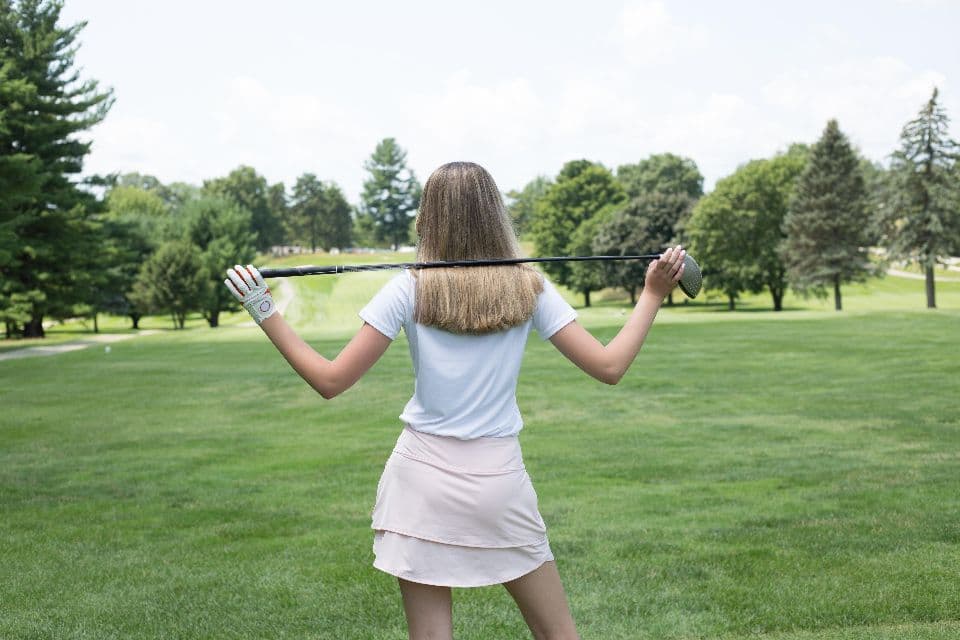
Golf for kids
Golf is one of very few sports you can play from age 5 to age 85, with the same people and in the same place. That makes it an exceptional family sport.
It is also where most parents go wrong, and almost always with the same mistake: treating it as a career instead of a game.
What age to start
There is no correct age, there are stages. What changes is not the technique but how much a child can hold their attention on.
| Age | What works | Session length |
|---|---|---|
| 4-6 | Play, coordination, hitting with a plastic or adapted club. No technique | 20-30 min |
| 6-8 | Short game, putting, first ideas about grip. Lots of games and short contests | 30-45 min |
| 8-11 | Full swing, first holes, basic rules and etiquette | 45-60 min |
| 11-14 | Full course, handicap, federated competitions | 60-90 min |
| 14+ | Structured training, if the child asks for it | Depends on the goal |
The warning sign: if your child routinely asks to leave before the session ends, the session is too long or too technical. It is not a lack of interest: it is too much demand.
Equipment: by height, not by age
As in adult golf, the mistake is buying by label. An 8-year-old can be 1.20 m or 1.40 m tall, and those twenty centimetres change the entire set.
How to choose: club length is determined by height and by wrist-to-floor measurement. A club that is too long forces the child to stand away from the ball and compensate with the body, and that compensation becomes a fault that takes years to remove.
What to buy and what not to:
- An adapted half set, not a full set. Four or five clubs — a wood, a mid iron, a wedge and a putter — is plenty until 11 or 12.
- Second-hand, always. Children grow. A junior set is outgrown in 18 months. Buying new every season makes no sense; the second-hand junior market is very active precisely because of this.
- Never cut-down adult clubs. Shortening an adult club changes its weight and flex and produces a club that behaves badly. It is worse than having no clubs.
- Soft balls. Low compression, so a slow swing can actually compress them.
When to change sets: when the child has grown 8-10 cm, or when you see them crouching or stretching to reach the ball.
The junior federation licence
The process matches an adult's — a licence through the regional federation or a club — with one important difference: fees by age category are substantially lower than the adult rate.
The RFEG sets age categories (benjamín, alevín, infantil, cadete, junior) with tiered fees, and several regional federations exempt under-age players from the theory and practical tests for a handicap. In Catalonia, for example, registered players aged 21 or under sit no exam.
Check your federation's fee circular for the current year: rates are updated every season. The general procedure is in how to get your golf handicap in Spain.
The mistake that makes them quit at thirteen
This is the most important part of this article.
Most children who quit golf do not do so because they are no good at it. They do it because golf stopped being theirs. It usually happens when:
- The score starts mattering more than the round.
- A parent corrects technique during play.
- Sessions become training instead of play.
- The child gets compared to others their age.
What works instead:
- Nine holes, never eighteen until well into their teens. Four and a half hours is too long.
- Let the coach correct, not you. You can be a playing partner or a coach, not both. Choose partner.
- Fun formats. Family scrambles, short-game contests, "hole this putt and you pick the snack". The score cannot be the only scoreboard.
- Let them play with other kids. The social side sustains the interest far more than technical progress does.
- Let them be bored sometimes. If one day they only want to putt for an hour on the practice green, let them putt for an hour.
Real benefits, without overselling
No hype: golf offers a few things team sports do not give as readily.
- Autonomy and responsibility. The child counts their own strokes, applies their own rules and signs their own card. Very few sports place honesty in the player's own hands.
- Managing frustration. In golf the bad shot is constant and unavoidable, and you have to carry on. It is direct emotional training.
- Outdoor activity. Four to six kilometres of walking per round.
- Intergenerational. The handicap system lets a 10-year-old and their grandparent genuinely compete in the same round. Almost no other sport allows that.
How to start in practice
- A taster lesson. Many academies offer a free or near-free first session. No commitment.
- A course's junior school. Usually weekly group sessions with clubs provided and reasonable prices. It is the best format: they learn and make friends at the same time.
- Pitch & Putt or par 3. Short, cheap layouts, perfect for the first real outings.
- Buy equipment only once it has stuck. Not before.
At Teeup we work with Z1 Golf Academy and with network courses that run junior schools, and you can book the family tee time from the app when the time comes.
Frequently asked questions
At what age can a child start playing golf? From 4 or 5 in a play format. The full swing and first rounds usually arrive between 8 and 11.
What clubs does a child need? A half set matched to their height, not their age. Four or five clubs is enough, and second-hand because they will outgrow them within eighteen months.
Can you cut down adult clubs? Not advisable. It changes the weight and flex and produces a club that behaves badly.
How much is a junior federation licence? Considerably less than an adult one, with tiered fees by age category. Check your federation's circular, which updates every season.
Does a child need a handicap? Only to compete. Many federations exempt younger players from the theory and practical tests.
How many holes should they play? Nine, until well into their teens. Eighteen holes is too many hours for a child.
How do I stop them quitting? Keep it play rather than training, let them play with other kids, and let the coach fix the technique rather than you.
A child who associates golf with having a good time with family and friends will still be playing at forty. One who associates it with being corrected quits at thirteen.
Teeup helps you find courses with junior schools and book the family tee time from your phone.
Download the Teeup app and book your next round.