
 Descargar App
Back to blog
tournamentsHow to play a golf scramble: rules, strategy and formats
The scramble is the most social and enjoyable format in golf. We explain the official rules, how to build the best team and the strategy to win.
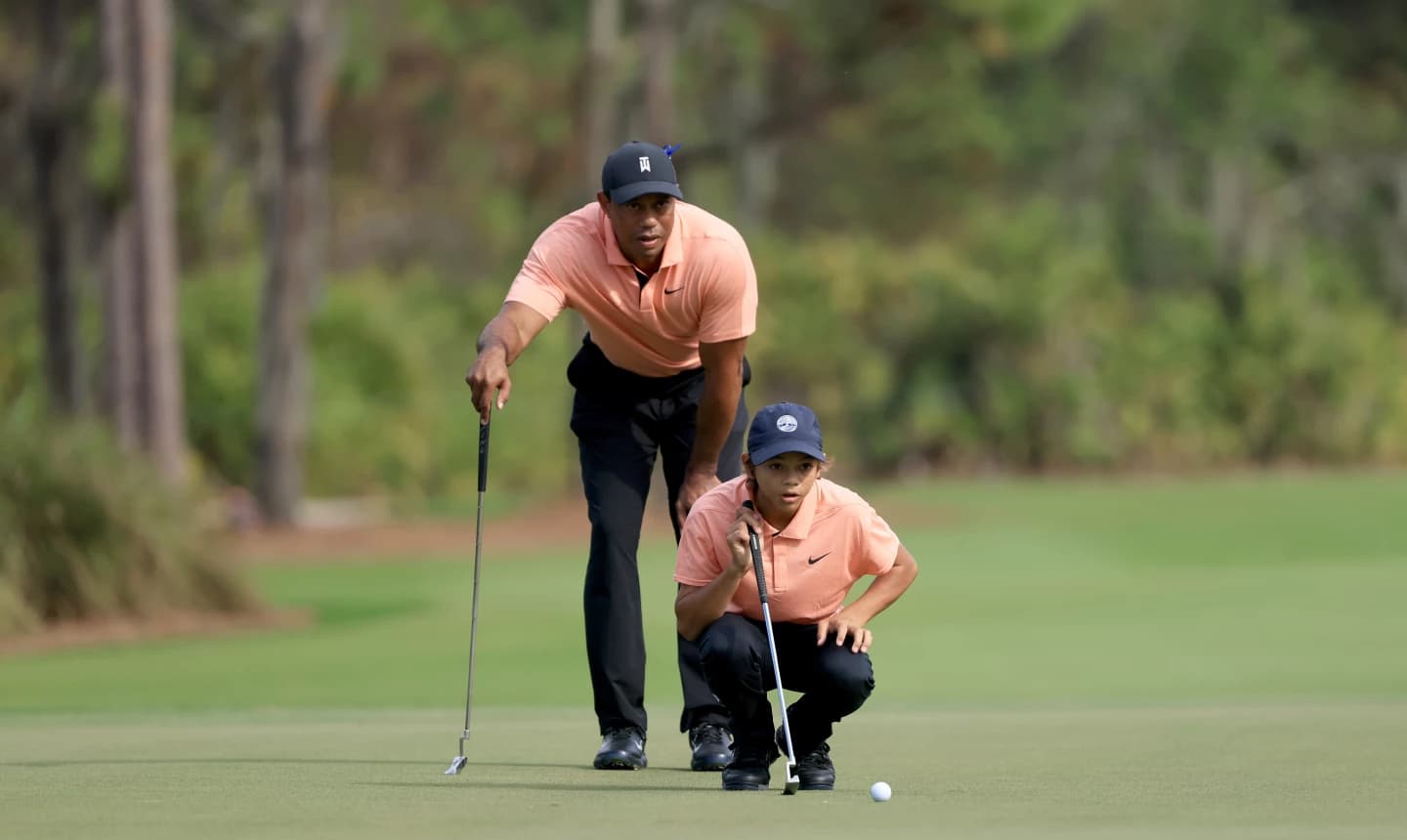
The scramble is the golf format that appeals most to people who play infrequently, and equally to those who play all the time. There is something in its mechanics — the pooling of each player's best, the shared pressure, the hole saved by the person nobody expected — that turns a golf round into a genuinely collective experience.
If you are organising a tournament, a corporate day or simply a round with friends of different levels, the scramble is probably the right format. This guide explains how it works, how to plan it and how to play to win.
What is a scramble
The scramble is a team golf format in which all members of the team hit from the same point on each shot. The process is:
- All players hit their shot from the tee (or from wherever the ball is in play).
- The team chooses the best shot of all.
- All players move to that position and hit again.
- The process repeats until the ball is holed.
Only the team's collective score counts — the number of shots until the ball is in the hole. It does not matter who made the shot that was chosen or how many shots the others took.
The practical consequence is that the team always advances from the best available position. This makes rounds faster, allows lower-level players to contribute meaningfully and produces a final score significantly better than any individual player could achieve alone.
The most common scramble formats
There are several variants of the scramble, and choosing the right one depends on the number of players and the objective of the event.
4-player scramble (Texas Scramble)
The most common format. Four players form a team, all hit and the best shot is chosen at each point. It is the standard format in corporate tournaments and charity events.
It has an additional variant: the shamble, in which only the drive is played in scramble format (all hit, the best is chosen) and from the second shot each player plays their own ball. It is an interesting hybrid that combines the spectacle of a shared drive with individual scoring.
2-player scramble (Greensomes or Florida Scramble)
More demanding than the four-player version, because there is less variety of shots to choose from. In the Florida Scramble, the player whose shot was not chosen on each turn is the one who hits the next shot. It adds an interesting layer of strategy.
Ambrose
A popular variant, particularly in Australia and the United Kingdom. It is essentially a scramble with a handicap: the team's gross score is adjusted with a handicap calculated from the individual handicaps of all members (usually the sum divided by a coefficient). It allows teams with different handicap combinations to be levelled.
How handicap is calculated in a scramble
Most scramble tournaments apply a team handicap to level groups of different abilities. The most common formula is:
4-player scramble: Team handicap = (25% of best player's handicap + 20% of second + 15% of third + 10% of weakest)
This formula gives more weight to the weakest player in the team, who statistically contributes fewer chosen shots. The result is rounded to the nearest whole number.
In less formal tournaments it is common to simplify: dividing the sum of handicaps by 8 or by 4, depending on the desired level of rigour. What matters is that all teams use the same method.
Strategy to win a scramble
The scramble looks easy to play but has much more strategic depth than it appears.
Team composition matters
The ideal scramble team is not the one made up of the four best players. It is the one with the greatest variety of strengths.
A team with a long hitter off the tee, a precise iron player, a strong short game around the green and a solid putter has a structural advantage over a team of four long but inconsistent players.
The key is that in a scramble the chosen shot does not always have to come from the best player. It comes from the player who was best on that specific shot. Variety of profiles within the team maximises the probability that there is always someone with a good option.
Do not always use the best shot
One of the most counterintuitive decisions in scramble: sometimes the shot that appears worse in the short term is the better strategic option.
Example: on a par 5, the team's longest drive lands in the fairway but to the right, with a tree blocking the line to the green. The shorter drive is 15 metres back but centred, with a direct line. The correct decision may be to play from the shorter one if the angle justifies it.
In the short game this is particularly relevant: sometimes the ball sitting 4 metres from the hole on a difficult line is a worse option than the one sitting 6 metres away on a clean line.
Managing minimum drive requirements
Many scramble tournaments include a minimum drives rule: each team member must have at least X drives chosen during the round (usually 3 or 4 out of 18 holes). This rule exists to prevent the team from always playing the longest hitter's drive.
Strategy around this rule is important: ensure each player's minimum is met on the holes where the difference between drives is smallest, so the best driver can be used freely on the most decisive holes.
Collective putting
In scramble, the team has up to four putts from the same line. This seems like an enormous advantage, and it is — but it also means that green reading is more important than in individual play.
The first player to putt has the advantage of providing real information about the speed and break. The rest of the team can adjust based on what they have seen. Plan who putts first based on who has the best green reading and who is most confident with the putter under pressure.
How to organise a scramble tournament
If your goal is to organise the tournament, there are some scramble-specific considerations worth keeping in mind.
Team formation. In tournaments with many participants, teams can be formed in various ways: pre-formed by the participants themselves, random assignment or balanced distribution by handicap (one player from each category per team). The last option is the fairest if you want competitive results.
Pace of play. Scramble is notoriously faster than stroke play because the team always advances from the best position. An 18-hole round with four players in scramble format should be completed in 3h30-4h under normal conditions.
Prizes. In addition to the general leaderboard, scramble tournaments usually include specific prizes: hole in one (usually the biggest prize, sometimes sponsored with a car or a trip), longest drive, closest to the pin on a par 3. These prizes add excitement independent of the overall result.
Simplified rules. In recreational scramble tournaments it is common to apply simplified rules: no lost ball penalty (the ball is dropped at the last known position with one stroke penalty), no three-minute search, conceding short putts within the grip of the putter. Always clarify the level of rigour before teeing off.
Teeup has experience organising scramble tournaments and can help you connect with network courses that have experience running this type of event.
Download Teeup and organise your next scramble.