
 Descargar App
Back to blog
guidesCorporate golf: why it works and how to run a company tournament
Four hours with a client and no screens. Which format stops anyone getting bored, what it costs per head, a realistic schedule, and the five errors that ruin a company day.
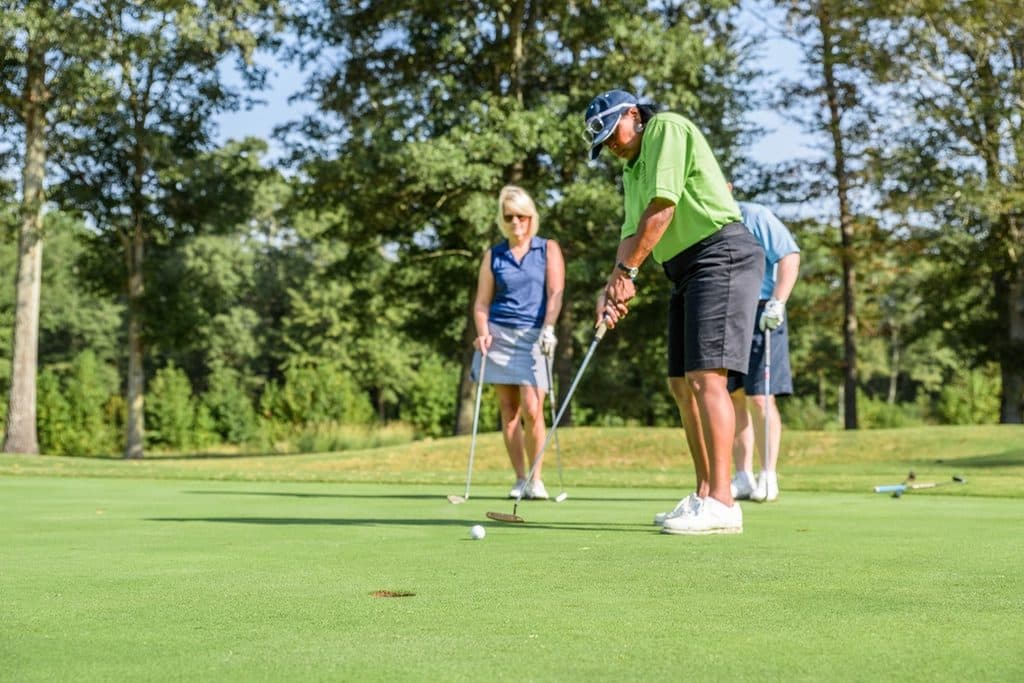
Corporate golf
There is a specific reason so many commercial relationships get built on a golf course, and it has nothing to do with prestige: it is four hours of conversation with the same person, with no screens, no meeting room and no clock.
Not many formats offer that. Lunch is ninety minutes. A padel match is an hour, in silence. A round of golf is four hours with enough dead time for the conversation to go wherever it needs to.
This article is about running one so that it actually works.
First things first: the format decides everything
It is the decision that separates an event people remember from one where half the guests are bored by the 6th.
The real problem with a corporate tournament: the standards are wildly different. You will have an 8-handicapper and someone who has held a club three times in their life at the same event.
The answer is a scramble, and there is no serious debate about it. Everyone hits, the best ball is chosen, everyone plays again from there. The beginner never blocks the team: if their ball goes out, you play someone else's and carry on, and they still play every hole.
| Format | Works for corporate? |
|---|---|
| Scramble (teams of 4) | Yes. The default choice |
| Texas scramble | Yes. Add a minimum-drives rule so nobody is a spectator |
| Am-Am | Yes, if the group is more evenly matched |
| Individual stableford | Only if everyone plays regularly |
| Stroke play | No |
| Foursomes | No. The most uncomfortable possible format with mixed levels |
The full formats are in golf formats explained.
A realistic schedule
A well-run corporate tournament takes a full day. This is the shape that works:
| Time | What |
|---|---|
| 09:00 | Arrival, registration, coffee, cards and welcome gift |
| 09:45 | Range open. Group photo |
| 10:30 | Shotgun start. Everyone begins at once, each team on a hole |
| 15:00 | Round ends. Drinks while the committee scores |
| 15:45 | Lunch |
| 17:00 | Prize-giving and close |
A shotgun start is non-negotiable at a company event. With staggered tee-one starts, the first team finishes two hours before the last, and lunch and the prize-giving become a logistical disaster.
And one consequence to plan for: a shotgun needs the course exclusively, or at least a large block of tee times. That has to be booked months ahead, especially in spring and autumn.
What it costs per head
Indicative ranges, all in, per participant:
| Item | Budget | Mid | High |
|---|---|---|---|
| Green fee (group rate) | €40-60 | €70-100 | €120-200 |
| Buggy | €20-25 | €25-30 | €30-35 |
| Lunch | €25-35 | €45-70 | €80+ |
| Welcome gift | €15-30 | €40-70 | €100+ |
| Prizes and trophies | €10-20 | €25-40 | €60+ |
| Organisation | In-house | 10-15 % | 15-20 % |
| Total | €110-170 | €215-325 | €390+ |
Where you can save without it showing:
- Day of the week. A Tuesday costs far less than a Friday and the course is more available.
- Season. Outside peak season the group green fee can halve.
- The course. A well-maintained mid-range course delivers a better experience than a high-end one you only just afford and then have to cut the catering for.
Where NOT to save: on the food and the welcome gift. They are the two things people remember and talk about.
Monetisation: sponsorship
If the tournament has any scale, sponsorship can cover a substantial part of the cost.
Sponsorship formats that work:
| Format | What the brand gets |
|---|---|
| Title sponsor | Name on the tournament, presence across all materials |
| Hole sponsorship | Signage on a tee, activation at that hole |
| Longest drive contest | A dedicated hole, measurement and a branded prize |
| Nearest the pin | Same, on a par 3 |
| Welcome gift | Their product in every participant's bag |
| Prizes | Their product as trophy or category prize |
The commercial argument for the brand is not attendee numbers: it is the profile. Eighty high-spending participants and four hours of exposure is worth more than a mass event with no segmentation.
The five errors that ruin a company tournament
(01) Choosing the wrong format. Stroke play or individual stableford with mixed levels is the fastest way to ensure half your guests don't come back.
(02) Staggered starts. They throw the whole day out of sync.
(03) Not asking about guests' standards. You need to know who plays, who has a handicap and who has never held a club. Teams are built by mixing levels, not grouping them.
(04) Forgetting the non-golfers. There are always guests who don't play. A parallel beginner clinic during the morning, or an alternative activity, turns those guests from spectators into participants.
(05) Booking late. A shotgun at a decent course in April needs to be locked in by January.
The element almost nobody plans: the pairings
At a corporate tournament, who plays with whom is the event. The round is the pretext.
Think about teams with the same care you would give a seating plan:
- One experienced player per team, so the scramble works.
- Mix the profiles: don't put the four people from the same company together.
- If the objective is commercial, put the person who matters and the person who needs to talk to them in the same team.
- Never leave a beginner in a team of four experienced players.
Frequently asked questions
What is the best format for a company golf tournament? A scramble in teams of four. It lets very different standards take part without anyone blocking the team.
What does a corporate tournament cost per head? €110-170 at the budget end and €215-325 mid-range, all in.
What is a shotgun start and why is it necessary? All teams start simultaneously on different holes. It is what allows everyone to finish together so lunch and the prize-giving work.
How far ahead should I book? Three or four months for a shotgun in mid or high season.
What do I do with guests who don't play golf? A parallel beginner clinic, or put them in a scramble team where their standard doesn't penalise anyone.
Can you get sponsorship? Yes. Hole sponsorship, longest drive and nearest the pin contests, welcome gifts and prizes are the usual formats.
How many participants do you need? Forty people already works. For a full 18-hole shotgun, 72 to 90 is ideal.
A well-run company tournament is not a sporting event: it is four hours of conversation with the right people, wrapped in a format that makes nobody feel out of place.
Teeup organises tournaments and regional Ryder events — course, format, pairings and standings all handled — with agreements across more than 40 courses in Spain.
Download the Teeup app or get in touch to set yours up.