
 Descargar App
Back to blog
guidesHow to put backspin on a golf ball (and when you shouldn't try)
Backspin isn't manufactured with your wrists. It depends on contact, lie, club and ball. The five factors that create it, and why most amateurs don't need it.
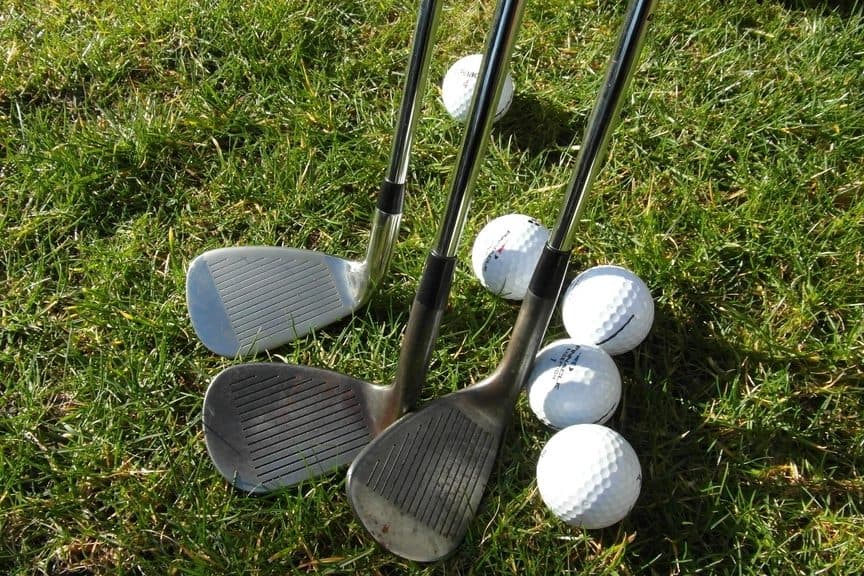
How to put backspin on a golf ball
Everyone has seen the shot: the ball lands on the green, takes two bounces and spins back. And almost everyone tries to reproduce it by doing something strange with their wrists at impact.
Let's start there: backspin is not manufactured. It is the physical consequence of five factors, and none of them happens in your hands during the shot.
What backspin is and why it matters
Every well-struck golf ball carries backspin. It is what keeps it in the air: the backward rotation generates lift, which is why a golf ball flies far further than a stone of the same weight.
What people call "backspin" is enough spin for the ball to stop dead or come back when it lands on the green.
And here is the nuance almost nobody raises: in most situations, what you want is not for the ball to come back. It is for it to stop predictably. A ball that spins back six metres is as bad as one that runs on six metres, because in both cases it did not finish where you aimed.
The five factors that create spin
In order of real importance:
(01) Quality of contact
Nothing else matters if this fails. To generate spin you need to strike the ball first and the ground second, with a clean face and a centred strike.
Hit the ground before the ball, or catch it off the toe, and the spin disappears no matter what else you do right.
How to get it: hands ahead of the clubhead at impact, weight on the front foot, descending strike. Developed in the golf swing explained phase by phase.
(02) The lie
This is the factor that decides whether the shot is even possible.
| Lie | Spin you can generate |
|---|---|
| Short, dry fairway | Maximum |
| Soft or wet fairway | High, though the ball stops anyway |
| Light rough | Reduced |
| Medium or thick rough | Practically none. The flyer appears |
| Bare lie | Difficult, needs perfect contact |
You are not going to generate backspin from the rough. Neither will a professional: grass gets between the face and the ball. Lies are covered in shots from difficult lies.
(03) The club
More loft, more spin. A sand wedge generates far more than a 7-iron.
And one maintenance detail that genuinely matters: the grooves create the spin. Dirty or worn grooves cut spin dramatically.
- Clean the face before every shot, not at the end of the round.
- Wedges wear out. Five years on the same ones with plenty of play and your grooves no longer do what they used to.
(04) The ball
Here equipment does matter. A urethane-covered ball generates considerably more spin than a two-piece surlyn one.
The uncomfortable contradiction for a beginner: the two-piece ball is the right choice on price and for reducing sidespin, and it is precisely the one that generates least backspin. Covered in how to choose a golf ball.
(05) Speed
More clubhead speed, more revolutions. It is why the television shot is a television shot: professionals reach speeds an amateur does not.
Practical consequence: if your speed is medium or low, you are not going to spin an 8-iron back, whatever you do. And that is entirely fine.
The setup for a spinning shot
If you have the right lie and club:
- Ball slightly back in the stance, to ensure a descending strike.
- Hands ahead, the grip pointing at your lead hip.
- Weight on the front foot, 60-70 %, and it stays there.
- Clean face. We keep saying it because it is what most people ignore.
- Accelerate through the ball. Decelerating kills spin completely.
- A full, committed swing. Spin comes from speed and contact, not from a wrist trick.
What NOT to do: trying to "cut" the ball, opening the face a long way, or making an odd hand movement at impact. All of that degrades contact, which is the number one factor.
Why most amateurs don't need it
This is the point that saves shots.
Backspin is a tool for attacking protected pins: when the flag sits just behind a bunker and you need the ball to stop within three metres. That is a situation an amateur should not be aiming at the flag in anyway.
For 90 % of your approaches, the correct strategy is aim at the middle of the green and let the ball run. That works with any ball, any club and any lie, and it does not demand a perfect strike. Covered in how to lower your score without changing your swing.
The correct order of priorities:
- Centred, consistent contact
- Distance control
- Target selection
- And a long way behind, spin
If 2 and 3 are not solved, working on 4 is wasted time. A player who controls distance and aims at the middle always beats one who sometimes spins it back and sometimes leaves it in the bunker.
How to train it when the time comes
Once you have consistent contact:
(01) The clean-face test. Ten wedges with a clean face and ten with a dirty one, from a dry fairway lie. The difference in how the ball stops will surprise you and you won't forget it.
(02) Spin ladder. Five shots with a sand wedge, five with a gap, five with a pitching wedge, all to the same distance. Watch how far each runs after landing. That is your real stopping-control chart.
(03) Old ball versus new ball. Same shot, two different balls. Check whether your equipment is limiting what you can do.
The Teeup Academy has stopping-control and distance drills with scoring, which is the useful part of all this.
Frequently asked questions
How do you put backspin on a golf ball? With a clean, descending strike (ball first, ground second), a dry fairway lie, a high-loft club with clean grooves, a urethane ball and enough speed.
Can you get backspin from the rough? Essentially no. Grass gets between the face and the ball and eliminates spin. That is where the flyer appears, which does the opposite: the ball flies further and doesn't stop.
Does the ball affect backspin? Considerably. A urethane ball generates far more spin than a two-piece surlyn one.
Why doesn't my ball stop on the green? One of these: off-centre contact, a dirty face or worn grooves, a rough lie, a two-piece ball, or low swing speed.
How often should wedges be replaced? It depends on use. With plenty of play, grooves lose effectiveness within a few years, and you notice it first in stopping control.
Do I need backspin to play well? No. You need distance control and good target selection. Spin is a precision tool that comes much later.
Backspin is a consequence, not a technique. Clean contact, clean face, a good lie and enough speed. Missing any of the four and no wrist trick will fix it.
The Teeup Academy has the contact and distance-control drills, which is what actually lowers your card.
Download the Teeup app and book your next round.