
 Descargar App
Back to blog
guidesLost ball and provisional ball: the rule that saves you the most shots
Three minutes of searching, how to announce a provisional so it counts, when it stops being provisional, and why stroke and distance is golf's most expensive penalty.
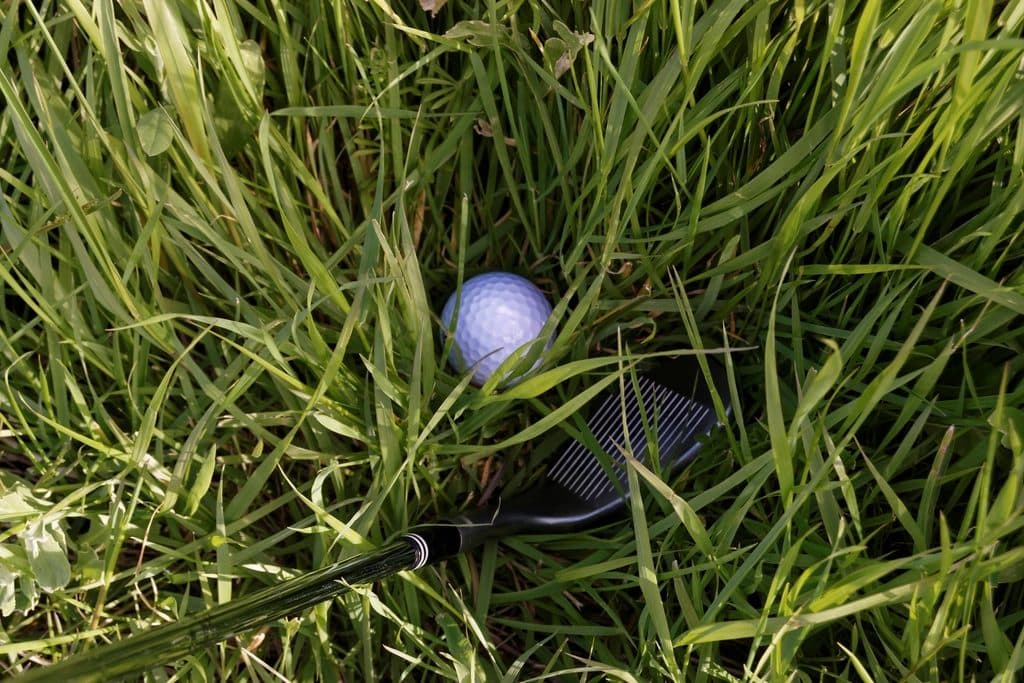
Lost ball and provisional ball
A lost ball is the most expensive situation in the rulebook: it costs stroke and distance. You lose a penalty stroke and you replay from where you were, so in practice it costs you two shots compared with finding the ball.
And yet almost nobody uses the tool that exists precisely to soften it. Let's take both.
When your ball is lost
A ball is lost when you cannot find it within 3 minutes.
The details that matter:
- The 3 minutes start when you begin searching, not when you hit the shot. If it takes two minutes to walk to the area, those two do not count.
- After 3 minutes it is lost even if it turns up. Find it at 3:30 and it does not count.
- If another player or a caddie starts searching before you do, the clock starts then.
It used to be five minutes. It changed in 2019, and the reason was pace of play.
What it costs: stroke and distance
| Situation | Penalty | Where you play from |
|---|---|---|
| Lost ball | +1 stroke | The spot of the previous stroke |
| Out of bounds | +1 stroke | The spot of the previous stroke |
Same rule for both. And it is the most expensive in the rulebook precisely because you lose both things: the stroke and the ground you had gained.
Example: you hit your tee shot on a par 4 and the ball is lost. You walk back to the tee and your next shot is your third. That hole is going to cost you 6 or 7 in all likelihood.
The provisional ball: the play almost nobody makes
If you think your ball may be lost or out of bounds, play another ball before you go looking for it. That is a provisional.
Why it is so valuable: if you get there and cannot find the original, you already have a ball in play where it should be. Without a provisional you have to walk back to the previous spot — which may be the tee, 200 metres away — and back again. That is five minutes lost and a group waiting behind you.
How to play a provisional properly
(01) Announce it out loud, and say the word.
You must say "provisional". Saying "I'll hit another" or "just in case" does not count: at that moment that ball automatically becomes your ball in play, the first one is abandoned even if you find it, and you have accepted a penalty stroke for nothing.
(02) Identify it.
State the brand and number: "playing a provisional, Titleist 3". That is what lets you tell them apart if both turn up. If both balls are identical and you cannot distinguish them, the original is treated as lost.
(03) Do it before you go and search.
Once you walk forward to look for the original, you can no longer play a provisional. It is played from the previous spot, before you leave it.
(04) Play it as far as you are allowed.
You may keep playing the provisional while it remains further from the hole than where you believe the original is.
What happens next: the three scenarios
| Scenario | Result |
|---|---|
| You find the original within 3 minutes and it is in play | Continue with the original. Pick up the provisional. No penalty |
| You don't find it, or it is out of bounds | The provisional becomes your ball in play, penalty stroke already included |
| You play the provisional from a spot nearer the hole than the original | The provisional becomes your ball even if the original later appears |
That third case catches a lot of people out. If you have advanced the provisional past where the original lay, you cannot go back even if you find it.
When you canNOT play a provisional
If you know the ball is in a penalty area. If your ball clearly went into the water, you cannot play a provisional: you must use the penalty area options, which are usually far more favourable than stroke and distance. They are in the golf rules you actually use.
This matters a lot: a penalty area lets you play from much closer. Playing a provisional when you shouldn't is giving away distance for free.
If you are unsure whether it went in the water or was lost in the rough beside it, you can play a provisional.
How to avoid losing the ball in the first place
Prevention beats procedure:
- Mark your balls. A marker dot. Unmarked, two identical balls nearby are a rules problem.
- Watch where it lands. The most expensive error is looking away before the ball comes down. Fix on a landmark: a tree, a post, a change of colour in the rough.
- Ask the group. Four pairs of eyes see far more than one, and it spreads the responsibility.
- Less driver where there's trouble. A lost ball is a symptom of dispersion. Covered in dispersion in golf.
- Provisional whenever you are unsure. There is no cost if the original turns up. The only cost is in not playing one.
Frequently asked questions
How long do I have to search for a lost ball? Three minutes from when you start searching. It used to be five; it changed in 2019.
What is the penalty for a lost ball? Stroke and distance: one penalty stroke and you replay from where you hit it.
How do you announce a provisional ball? By saying the word "provisional" out loud and identifying the ball by brand and number.
What if I don't say "provisional"? That ball automatically becomes your ball in play, with the penalty included, and the original is abandoned even if you find it.
Can I play a provisional if my ball went in the water? Not if you know it entered a penalty area. There you use that area's options, which are better.
When does it stop being provisional? When you play it from a spot nearer the hole than the original lies, or when the original is declared lost.
What if I find the original after playing the provisional? If you find it within 3 minutes and have not advanced the provisional past it, you continue with the original with no penalty.
A provisional is free if the original turns up and saves you two shots and five minutes if it doesn't. There is no argument against playing one.
Teeup has a rules chatbot inside the app to settle these situations on the course.
Download the Teeup app and book your next round.