
 Descargar App
Back to blog
trendsThe rise of indoor golf: why golfers are training under a roof
Indoor golf is transforming how golf is practised and learned in Spain. Data, trends and the reasons behind the growth of golf simulators.
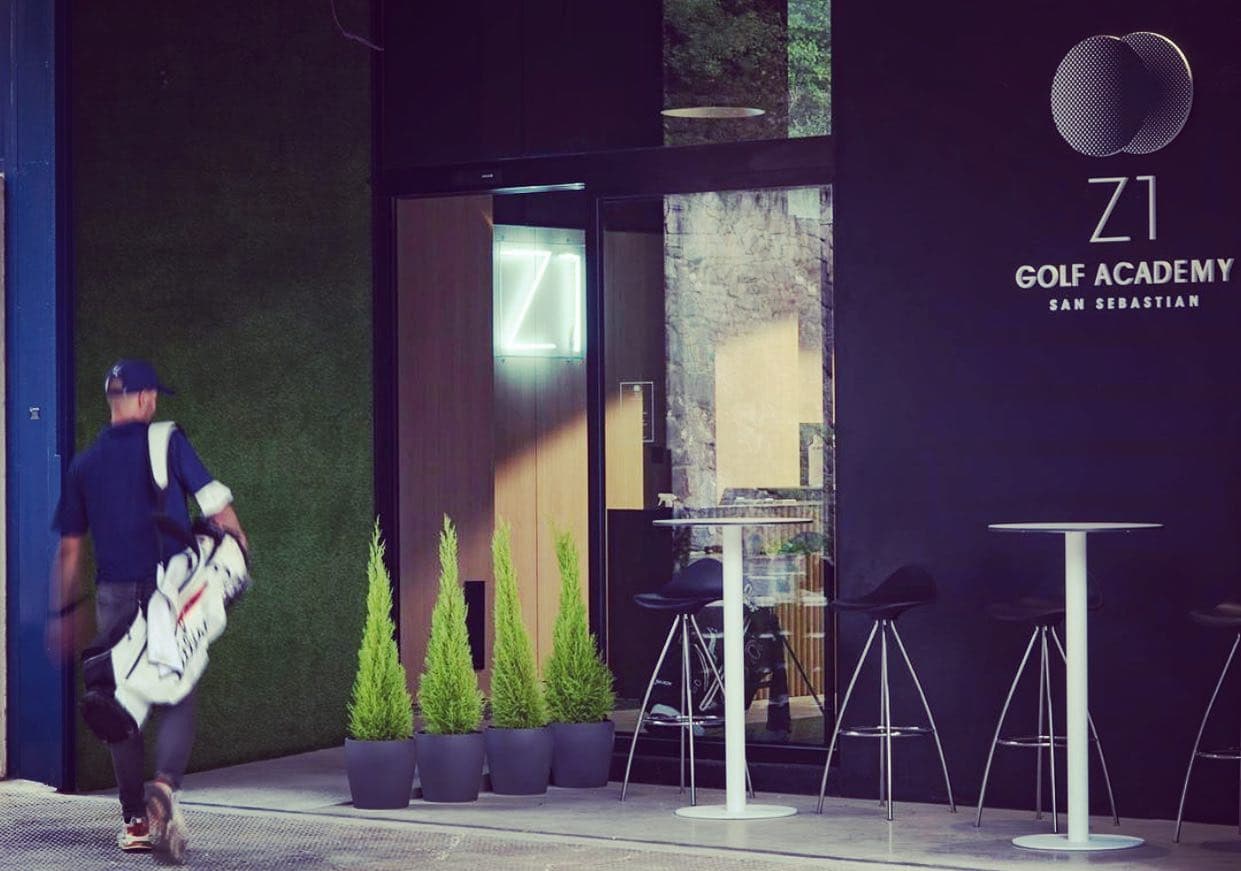
Indoor golf is not a trend. It is a structural change in how golfers practise, learn and enjoy the sport. And in Spain, that change is arriving five to ten years behind northern Europe — which means we are at the perfect inflection point to understand where this is heading.
The numbers that explain the shift
In Scandinavia, Germany and the United Kingdom, indoor golf has been part of the normal golf ecosystem for more than a decade. In countries like Sweden or Norway, where winter makes outdoor play impossible for months, indoor centres went from being a complement to becoming the first point of contact with the sport for many new players.
The result is paradoxical: countries with far harsher winters than Spain have higher golf growth rates. A significant part of that growth is directly linked to the proliferation of indoor centres that removed the seasonality from the sport.
Spain has more than 430 golf courses and a privileged climate for outdoor play practically year-round. But that does not mean indoor has no room — it means outdoor will not disappear, but indoor will cover needs that the course cannot resolve.
The five reasons for growth
Simulator technology has made a leap
Ten years ago, a golf simulator was expensive, imprecise and came with a limited course library. The data it generated was basic and the visual experience was mediocre.
Current simulators — Trackman, Foresight GC3, Full Swing — are professional analysis tools that capture more than 30 shot parameters in real time with the precision that PGA Tour players use for their analysis. The visual experience has improved to the point where playing Augusta National on a simulator is a genuinely immersive experience. And the available course library includes hundreds of iconic layouts from around the world.
The technological leap has made the simulator a desirable experience in its own right, not just an alternative to the course when it rains.
The cost of outdoor golf is rising
The cost of playing golf in Spain has increased consistently in recent years. Green fees at quality mid-level private courses range from €60 to €120 at weekends. Municipal and more economically accessible courses are at capacity with waiting lists.
A 90-minute simulator session costs between €20 and €40. For the golfer who wants to practise frequently — especially high volumes of iron or approach shots — indoor is far more economically efficient than going to the course each time.
Golfers' time has compressed
The profile of the Spanish golfer is changing. New players joining golf are younger, more urban and have less time available. A full 18-hole round involves travel, 4-5 hours of play and, in many cases, the whole day committed.
A simulator is in the city, can be booked in one-hour slots and allows specific aspects of the game to be worked on in 60-90 minutes. For the golfer with a packed schedule, that is not a second option — it is the only option in many weeks.
Demand for technical analysis is growing
The modern golfer is more analytical than one of twenty years ago. Access to educational golf content — YouTube, podcasts, social media with professionals teaching swing mechanics — has created a more informed player base that wants to understand their game at a technical level, not just play.
Simulator data answers exactly that demand. Knowing that your attack angle with the driver is -3° and that it is costing you 15 metres of distance, or that your smash factor is 1.42 when the optimum is 1.50, turns practice into something measurable and oriented towards specific results.
The business model has matured
The first indoor centres in Spain were expensive facilities aimed at a niche audience. The model has evolved: more accessible centres, with different membership formats, spaces that combine simulators with a putting area, academy, social area and food.
Indoor has gone from being a service to being an experience. And that enormously broadens the potential audience.
The indoor player profile has changed
If five years ago the typical simulator user was an advanced player with a low handicap seeking technical analysis, today the profile is much more diverse.
Beginners discover golf for the first time in a pressure-free environment, with immediate feedback and without the public exposure of the course. For someone who wants to try the sport, starting in a simulator has a much lower psychological threshold.
Mid-level players use indoor to maintain their level in winter, work on specific aspects of the game (driver, approach, chipping) and get a fitting without needing to visit a specialist shop.
Corporate groups and friends use indoor spaces as a leisure experience. Playing 9 holes at Pebble Beach with four friends on a Friday afternoon, with food and drinks, is an entertainment proposition that has no equivalent in outdoor format.
Injured players or those with reduced mobility find in indoor a space where they can keep practising with adaptations the course cannot offer.
Technology's role in democratising golf
One data point summarises well the impact of indoor on access to golf: professional fitting was until recently exclusive to players with the budget and access to specialist shops. Today, a well-equipped indoor centre can provide a complete fitting to any player, at any level, with objective data.
That means a beginner can know within the first month that the wrong shaft flex is costing them distance and accuracy. Or that a handicap-20 player can discover their irons are too short for their posture. Adjustments that previously took years to discover through trial and error can now be identified in a 60-minute session.
Teeup facilitates access to that professional fitting through its partnership with Z1 Golf Academy, and is part of a broader movement: making the tools that improve play available to all golfers, not just those at the highest level or with the largest budget.
Where indoor golf in Spain is heading
The projection is clear: the number of indoor centres in Spain will double in the next three to five years. Medium-sized cities — Bilbao, Seville, Valencia, Málaga — that today have one or two centres will have five or ten. Large cities will consolidate networks of facilities with different service profiles.
The model has already been proven in Europe. The Spanish market has all the conditions to replicate and scale it.
For the golfer, that means more options, more competitive prices and an increasingly integrated experience between outdoor play and indoor practice.
For the sector, it means a growth opportunity in the player base that the exclusively outdoor format has never been able to capture.
With Teeup you can already access indoor centres in the network and benefit from the special conditions the platform has negotiated for its members.
Download Teeup and enter the golf of the future.