
 Descargar App
Back to blog
guidesLearning golf without a coach: how far you can get and how to do it properly
It's possible, but it has a ceiling and a trap. What you can learn alone, what you can't, the right order for self-taught players, and the three things that derail them.
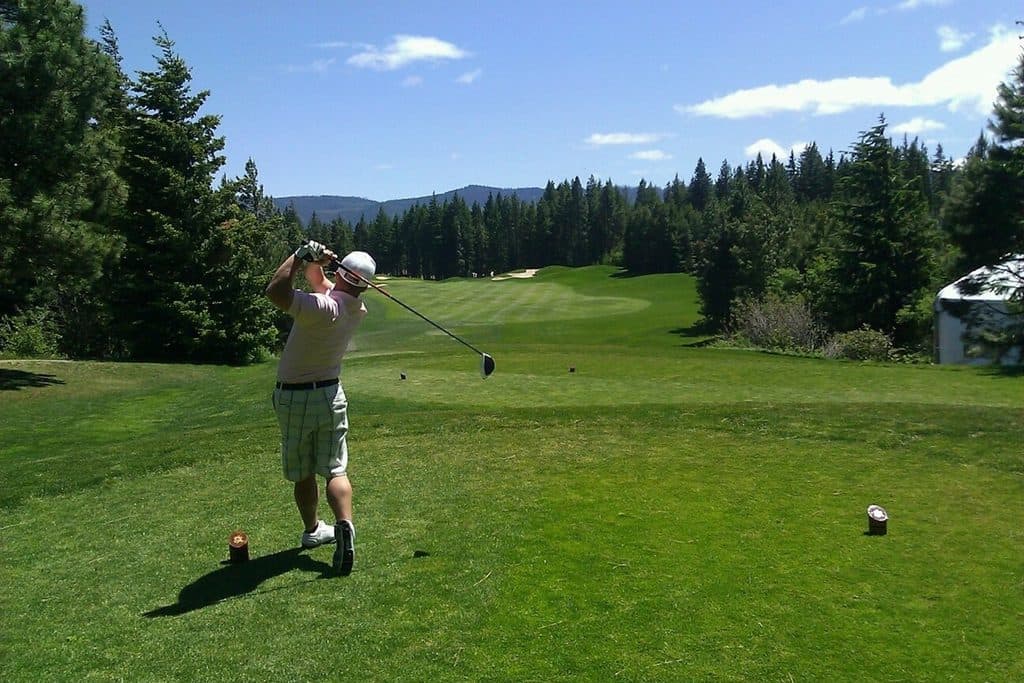
Learning golf without a coach
Yes, it can be done. There are thousands of hours of free instruction available and plenty of people have reached a low handicap without ever taking a lesson.
But first, the uncomfortable part: most self-taught players stall between handicap 30 and 25, and almost always for the same reason. Not lack of practice, but having locked in two or three compensations early on that then block any progress.
This article is about learning alone while minimising that risk.
What you can learn alone and what you can't
| Learned well alone | Needs an outside eye |
|---|---|
| Rules and etiquette | The grip |
| Strategy and course management | Posture and alignment |
| Distance control in putting | The swing plane |
| Basic short game | Diagnosing the cause of a fault |
| When to use each club | Correcting compensations already locked in |
The pattern is clear: anything you can verify against an objective result, you can learn alone. Anything that depends on sensing your own position, you cannot.
And there lies the self-taught player's central problem: you cannot see your own swing and your feel lies. Almost everyone believes they turn more than they do and that their hands are further ahead than they are.
The right order for a self-taught player
If you are going to do it alone, the order matters far more than it would with someone correcting you.
(01) Grip and posture, before anything else. They cause 80 % of the errors that follow, and they are the only things you can check against an objective reference without help:
- Two or three knuckles visible on the top hand.
- The "V"s on both hands pointing at your right shoulder.
- Tilt from the hips, arms hanging.
- Feet, hips and shoulders parallel to the target line, not pointing at the target.
Detailed in the golf swing explained phase by phase.
(02) One club for the first month. The 7-iron. Nothing else. Learning to strike a ball is one skill; doing it with fourteen different clubs is fourteen learning curves at once.
(03) Short game and putting before the driver. That is where 60 % of your shots are, and where the technique is simplest and most verifiable. Learning the descending strike with a wedge also teaches you the principle you will then need with every iron: the short game: chipping, pitching and bunker shots.
(04) The driver last. It is the longest club, the least forgiving and the one that creates the most bad habits when you pick it up early.
The three tools that partly replace a coach
(01) Video
The most important one and the one almost nobody uses properly.
How to film it: phone on the ground or on a cheap tripod, two angles: face-on and down the line (behind the ball, at hand height). Three or four swings from each.
What to look at, and only this to begin with:
- Are your feet and shoulders parallel to the line? (down-the-line view)
- Does your back point at the target at the top? (face-on view)
- Is your weight on the front foot at the finish?
- Can you hold the finish for three seconds?
What NOT to do: compare yourself with a professional's swing. Their proportions, mobility and speed are not yours, and copying isolated positions from an elite swing is one of the most efficient ways to injure yourself.
(02) Impact feedback
Foot spray or stickers on the clubface. Ten balls and you see exactly where you strike it.
It is the most honest substitute for a coach because it does not depend on your perception. If the pattern is towards the toe, that is your work, whatever your feel tells you.
(03) Numbers
A self-taught player without data is guessing. Always record something:
- How many of ten balls land inside an imaginary fairway width.
- How many chips finish within a metre and a half.
- How many two-metre putts you hole out of ten.
The full method is in how to practise golf.
The three things that derail self-taught players
(01) Changing advice every week. The number one danger of learning online. There are ten contradictory explanations of every swing element, all argued with conviction. Pick one source and stay with it for six months. A mediocre method applied consistently beats three good ones applied for three weeks each.
(02) Practising volume without structure. A hundred balls in a row with the driver is not practice: it is repeating your error a hundred times until it becomes permanent.
(03) Not playing on the course. Many self-taught players live on the range. But the range trains technique and the course trains decisions, and decisions are what lower scores: how to lower your score without changing your swing.
The middle path almost nobody considers
It is not "lessons or no lessons". There is a middle route that delivers 90 % of the benefit for a fraction of the cost:
Three or four lessons at the start, then on your own. Those first sessions build the grip, posture and alignment correctly from day one. They cost €120-240, take three weeks, and save you the months later spent dismantling compensations.
Plus a check-up lesson every three or four months. The coach looks, fixes one thing, and you work alone until the next one. It is the most efficient model for someone who wants autonomy without a ceiling.
If cost is what is holding you back, note that several Spanish regions have beginner courses subsidised by federations and town councils, and group lessons bring the hourly price down a long way. The numbers are in how much it costs to start playing golf.
The six-month self-taught plan
| Month | Focus | Where |
|---|---|---|
| 1 | Grip, posture and alignment. 7-iron only | Range |
| 2 | Descending strike with irons. Putting | Range and practice green |
| 3 | Short game: chip and pitch. First 9 holes | Pitch & Putt or par 3 |
| 4 | Woods and hybrids. Weekly video | Range and 9 holes |
| 5 | Driver. Bunkers | Full range work |
| 6 | Full rounds. Recording data | Course |
And in parallel from month 1: rules and etiquette. It is the easiest thing to learn alone and what most helps you fit into a group. The six situations that matter are in the golf rules you actually use.
Frequently asked questions
Can you learn golf without a coach? Yes, but it is the slow route with the highest risk of locking in compensations. Most self-taught players stall between handicap 30 and 25.
What is hardest to learn alone? Grip, posture and swing plane, because they depend on sensing your own position and feel lies.
What is the minimum number of lessons you'd recommend? Three or four at the start to build the fundamentals, plus a check-up every three or four months.
Are YouTube videos useful? Yes, if you pick a single source and stay with it for several months. The problem is not quality, it is the contradiction between methods.
Which club should I start with? The 7-iron, and only that for the first month.
How long before I play 18 holes decently? One to two years self-taught, versus six to twelve months with initial lessons.
Learning alone is entirely viable if you respect the order, film yourself, measure, and stop changing method every week. The one investment genuinely worth making is that half-dozen lessons at the start.
The Teeup Academy has structured drills with scoring, which is exactly what a self-taught player needs most: an objective standard that does not depend on your feel.
Download the Teeup app and book your next round.